
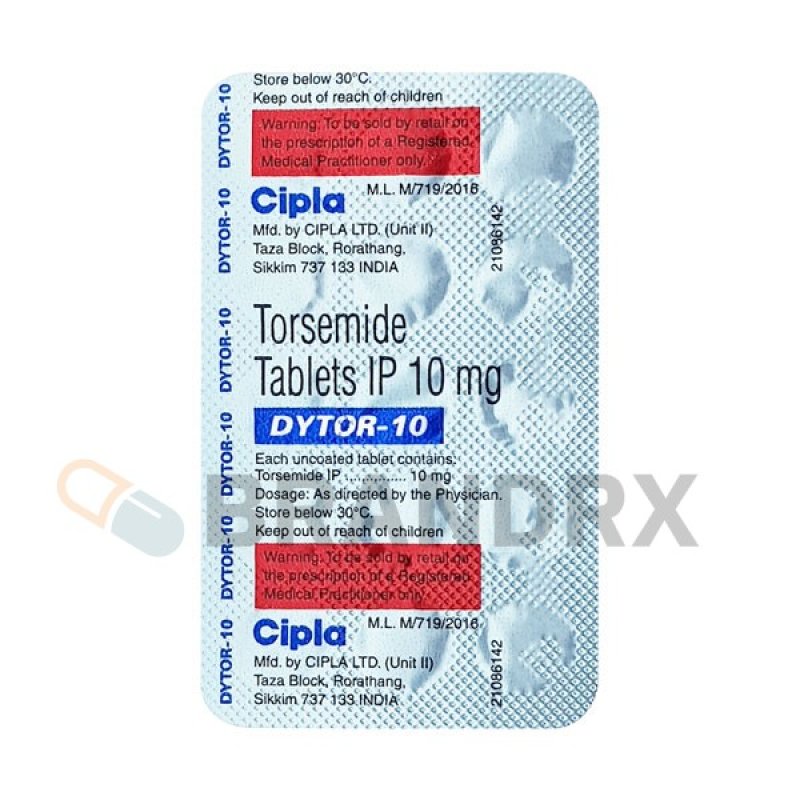
Dytor 10 mg Cipla: Understanding Its Definition and Key Characteristics
Dytor 10 mg Cipla is a medication primarily used for its diuretic properties, which assist in the elimination of excess fluid from the body. This medication is often prescribed to manage conditions such as hypertension and edema associated with heart failure, liver disease, or kidney dysfunction. Its active ingredient, torsemide, works by inhibiting sodium and chloride reabsorption in the kidneys, promoting increased urine production. As a potent loop diuretic, Dytor 10 mg Cipla effectively helps to reduce blood pressure and manage fluid retention, offering significant therapeutic benefits for patients in need. Key characteristics include its rapid onset of action, extended duration of effect, and its formulation that allows for both oral administration and optimal individual dosing.
Presentation and Form of Dytor 10 mg Cipla
Dytor 10 mg Cipla is predominantly available in tablet form, making it convenient for patients to take as prescribed. Each tablet is formulated to contain 10 mg of torsemide, which provides a consistent dosage that helps enforce adherence to prescribed treatments. The tablets are usually supplied in blister packs or bottles, allowing for easy dispensing and storage. This oral presentation is beneficial as it allows for self-administration, thus improving the patient's ability to manage their condition effectively. In addition to the standard 10 mg dosage, Dytor may also come in lower or higher strengths, offering flexibility in treatment plans tailored to individual patient needs.
Why Choose Dytor 10 mg Cipla Over Other Options?
Dytor 10 mg Cipla stands out among diuretics due to its unique mechanism of action and effectiveness in fluid management. Unlike thiazide diuretics, torsemide has a stronger diuretic effect, making it particularly advantageous for patients who do not respond adequately to other medications. Users benefit from its faster onset and longer duration of effect, making it suitable for various clinical scenarios requiring intensive fluid management. Additionally, Dytor 10 mg Cipla tends to have a more favorable side effect profile, particularly for those with renal impairment. Patients should consider this medication not only for its efficacy but also for the convenience it offers when used as part of a comprehensive treatment plan for conditions such as edema or hypertension.
Long-Term Effects and Precautions for Dytor 10 mg Cipla
While Dytor 10 mg Cipla is effective for short- and long-term management of certain medical conditions, it is essential to be aware of potential contraindications. Individuals who are pregnant, breastfeeding, or have a known allergy to torsemide should avoid using this medication. Similarly, those with severe renal impairment, anuria, or electrolyte imbalances should consult a healthcare provider before starting treatment. Long-term use may lead to significant potassium depletion; therefore, periodic monitoring of electrolyte levels is recommended. Patients are also advised to maintain a balanced diet while on this medication. Understanding these factors ensures safe and effective use of Dytor 10 mg Cipla, minimizing any risks associated with its prolonged administration.
Practical Advice for Starting Dytor 10 mg Cipla
When considering or starting Dytor 10 mg Cipla, it is crucial to follow a healthcare provider's instructions closely to achieve optimal results. Patients should begin treatment by discussing their medical history and any current medications to prevent potential drug interactions. Dosing often starts low and may be adjusted based on individual response and specific health considerations. It is essential to take the medication consistently, preferably at the same time each day, to maintain steady levels in the bloodstream. Drinking adequate fluids is also vital to counteract possible dehydration, but patients should adhere to any fluid restrictions recommended by their physician. By following these guidelines, individuals can maximize the benefits of Dytor 10 mg Cipla while minimizing any adverse effects.
| Features | |
| Active substance | Torsemide |
| Also known as | Torsemide |
| Blood pressure | Lowers blood pressure |
| Chemical name | Torasemide |
| Dosage (medical) | Typically 5-20 mg once daily for hypertension, 10-200 mg once daily for edema |
| Dosage (sports) | Not applicable |
| Effects | Increases urine production, decreases fluid retention, lowers blood pressure |
| Formula | C16H20N4O3S |
| Half-life | 3.5 hours (oral), 3.5-4 hours (IV) |
| Hepatotoxicity | Low risk |
| Lab Test | Plasma or urine levels can be measured |
| Main action | Inhibits the Na+/K+/2Cl- symporter in the thick ascending limb of the loop of Henle |
| Side effects | Dehydration, electrolyte imbalance (including hypokalemia), hypotension, dizziness, headache, nausea |
| Storage conditions | Store at room temperature, protect from moisture and light |
| Strength | 10mg |
| Substance class | Loop diuretic |
| Trade name | Demadex |
| Use in sports | Not typically used in sports, potential for abuse in weight-class sports to decrease weight through rapid dehydration |
| Water Retention | Reduces water retention |
| Manufacturer | Cipla Ltd. |
| Packing | 15 tabs/blister |