
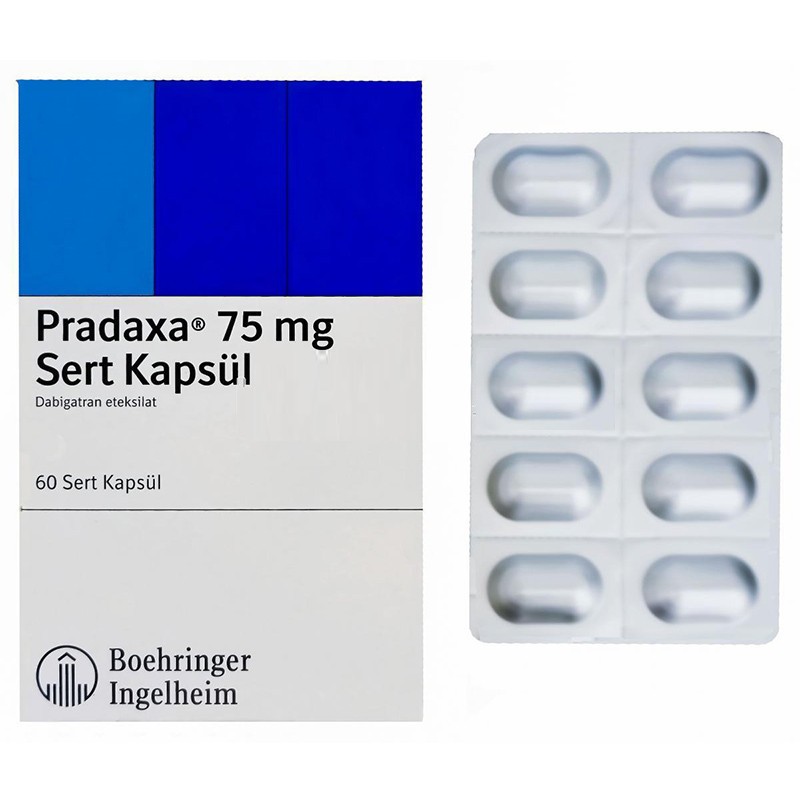
Define Pradaxa 75 Boehringer Ingelheim and Explain Its General Purpose
Pradaxa 75 Boehringer Ingelheim is an oral anticoagulant medication primarily used for the prevention and treatment of blood clots and specific conditions such as atrial fibrillation, deep vein thrombosis (DVT), and pulmonary embolism. The active ingredient in Pradaxa is dabigatran etexilate, which acts as a direct thrombin inhibitor, disrupting the blood clotting process and ultimately reducing the likelihood of thromboembolic events. By effectively inhibiting thrombin, Pradaxa maintains blood flow and reduces the chances of complications associated with abnormal blood clotting.
Pradaxa is generally prescribed to individuals who are at an increased risk of clot-related issues, such as those with atrial fibrillation, a heart rhythm disorder. In such cases, patients are prone to the formation of clots that can lead to strokes or other significant cardiovascular problems. Pradaxa's role in these therapeutic settings is crucial, as it offers a consistent and effective means of managing anticoagulation therapy without the need for frequent monitoring that is often necessary with older blood thinners like warfarin.
Describe How Pradaxa 75 Boehringer Ingelheim Fits into Broader Treatment Strategies or Usage Approaches
Pradaxa 75 Boehringer Ingelheim occupies a vital position within modern anticoagulant therapy and medical management of thromboembolic disorders. Its introduction to the pharmacological landscape provided healthcare providers with an alternative to traditional options, reflecting an overall shift in strategy toward medications that enhance patient compliance and safety. Pradaxa offers a fixed dosing regimen that eliminates the need for routine INR (International Normalized Ratio) checks, which were a hallmark of warfarin therapy. This feature dramatically simplifies anticoagulation management for both patients and healthcare professionals.
Moreover, in the context of broader treatment approaches, Pradaxa is often part of a comprehensive plan that includes lifestyle modifications, dietary considerations, and patient education about the signs and symptoms of potential adverse events. This multi-faceted approach aids in minimizing the risks associated with anticoagulation and optimizes therapeutic outcomes. Healthcare providers are encouraged to assess individual patient risk factors and adjust treatment plans accordingly, often using guidelines that cater to specific populations, such as elderly patients or those with renal impairment.
Explain the Advantages Users Typically Expect from This Preparation
Users of Pradaxa 75 Boehringer Ingelheim often anticipate a range of advantages that can enhance their overall healthcare experience. The following list outlines some of the key benefits associated with this medication:
- Direct Thrombin Inhibition: Pradaxa directly inhibits thrombin, providing effective anticoagulation without the complexities associated with traditional anticoagulants.
- No Routine Monitoring: Unlike warfarin, patients using Pradaxa do not require regular blood tests to monitor coagulation levels, which simplifies treatment compliance.
- Rapid Onset and Offset of Action: Pradaxa allows for a quick therapeutic response upon ingestion, and its effects diminish rapidly once the medication is stopped, allowing for flexibility in treatment.
- Fewer Dietary Restrictions: Patients on Pradaxa generally do not have to adhere to strict dietary guidelines, making it easier to maintain a normal lifestyle.
- Reduced Risk of Certain Bleeding Events: Clinical studies suggest that Pradaxa may be associated with a lower incidence of intracranial hemorrhage compared to traditional oral anticoagulants.
These advantages contribute to an improved quality of life for patients requiring anticoagulation therapy, making Pradaxa an appealing choice for many healthcare providers when recommending treatment options.
Discuss Risks, Precautions, and Contraindications for Use of This Preparation
Despite the benefits, it is vital for users to be aware of the risks, precautions, and contraindications surrounding the use of Pradaxa 75 Boehringer Ingelheim. As with any anticoagulant, the primary concern is the potential for bleeding complications, which can be serious and sometimes life-threatening. Patients should be monitored for signs of bleeding, such as unusual bruising, prolonged bleeding from cuts, or blood in urine or stool.
Patients with a history of gastrointestinal bleeding, renal impairment, or those at high risk for bleed-related complications may not be suitable candidates for Pradaxa therapy. Additionally, patients who are pregnant or breastfeeding should avoid using Pradaxa unless specifically directed by a healthcare provider due to the unknown effects on fetal development or nursing infants. Other contraindications include patients with mechanical prosthetic heart valves, as the use of Pradaxa in these individuals has not been established as safe and effective.
Furthermore, caution should be exercised in patients taking concomitant medications that affect coagulation or those with conditions that increase the risk of bleeding. Healthcare providers must perform a thorough assessment of the patient's medical history, current medications, and lifestyle factors to ensure the safe and effective use of Pradaxa.
Conclude with Guidance on How Users Should Approach Understanding and Using Pradaxa 75 Boehringer Ingelheim Responsibly
In conclusion, understanding and using Pradaxa 75 Boehringer Ingelheim responsibly requires a comprehensive approach that involves thorough education and proactive management. Patients are encouraged to have open discussions with their healthcare providers regarding their medical history and any concerns they may have about starting this medication. It is essential to follow dosing instructions precisely and to be aware of potential interactions with other medications or lifestyle factors that could affect treatment outcomes.
Moreover, ongoing education regarding the signs of serious side effects, particularly bleeding complications, is crucial for proactive management. Patients should maintain regular follow-up appointments with their healthcare provider to monitor their health status and make necessary adjustments to their treatment plan. Ultimately, a well-informed patient is better equipped to participate in their healthcare journey and to utilize Pradaxa as part of a broader therapeutic strategy tailored to their individual needs.
| Features | |
| Active substance | Dabigatran |
| Also known as | Dabigatran |
| Blood pressure | Typically does not affect blood pressure |
| Chemical name | N-{2-[4-(N'-{[(Hexyloxy)carbonyl]carbamimidoyl}carbamimidoyl)phenylaminomethyl]-1-methyl-1H-benzimidazol-5-ylcarbonyl}-N-pyridin-2-yl-beta-alanine ethyl ester |
| Dosage (medical) | 150 mg or 110 mg twice daily depending on renal function |
| Dosage (sports) | Not applicable as it is not used for sports enhancement |
| Effects | Reduces the risk of stroke and systemic embolism in patients with non-valvular atrial fibrillation |
| Formula | C34H41N7O5 |
| Half-life | 12 to 17 hours |
| Hepatotoxicity | No significant hepatotoxicity |
| Lab Test | Monitoring of renal function and possibly coagulation parameters |
| Main action | Anticoagulant |
| Side effects | Bleeding, gastrointestinal upset, heartburn, nausea |
| Storage conditions | Store at room temperature away from moisture and heat |
| Substance class | Direct thrombin inhibitor |
| Trade name | Pradaxa |
| Use in sports | None, as it does not enhance athletic performance |
| WAREHOUSE | International Warehouse 2 |
| Water Retention | No significant water retention |
| Manufacturer | Boehringer |